From Search to Conversation to Outcomes
Learn how small businesses and multi-location brands turn modern search traffic into real-time customer conversations that drive immediate business outcomes.
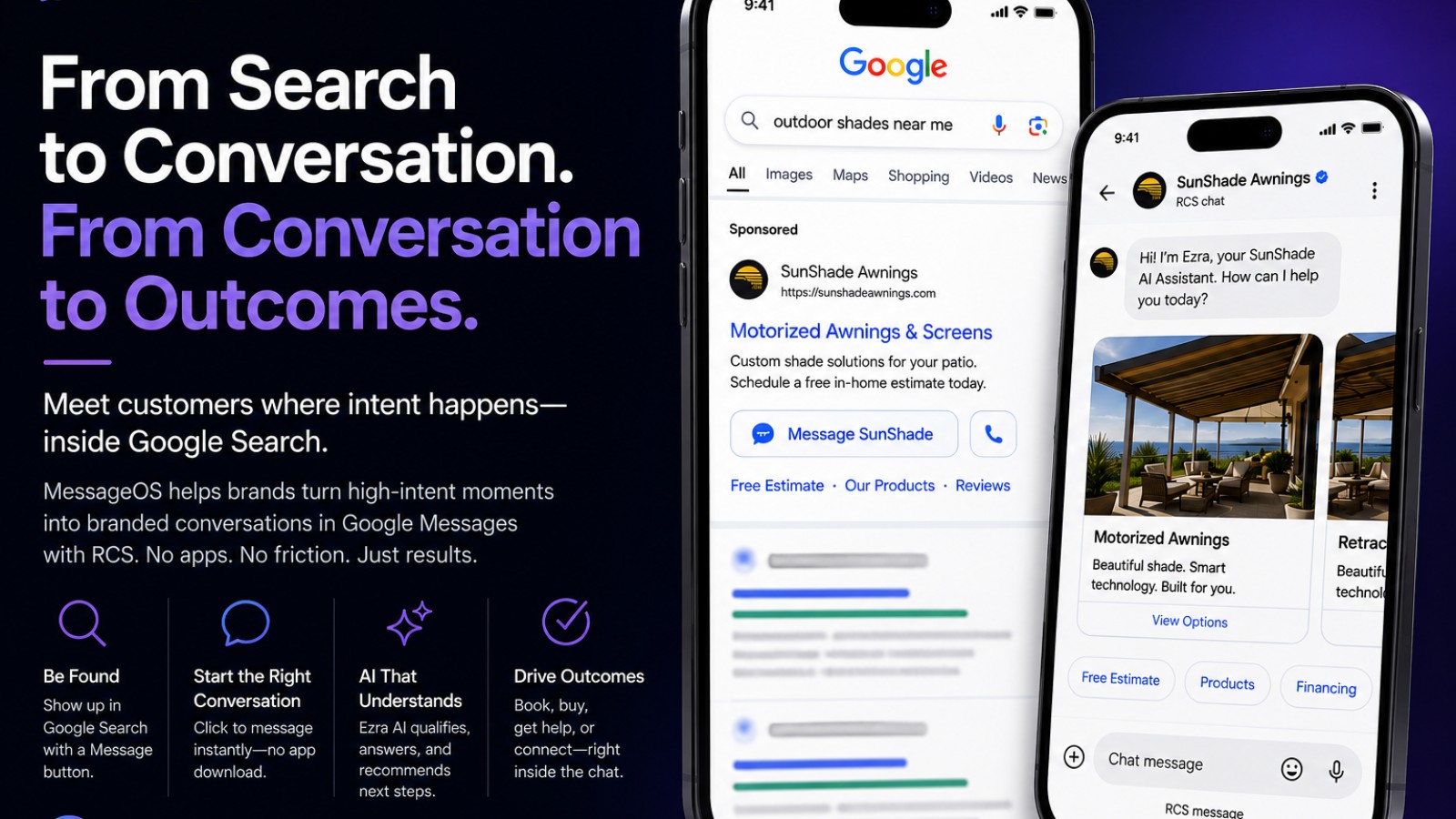
People no longer search the internet just to read flat pages of directories and blue links.
When a homeowner searches for a local service, a hungry diner looks for a menu, or a patient seeks a nearby clinic, they are looking to take action. Traditional websites force these high-intent searchers through clunky contact forms or unanswered phone calls.
To capture modern search intent, you must connect the initial search directly to a live conversation, and then guide that conversation to a measurable business outcome.
The Traditional Funnel is Broken
Historically, the path from search engine to customer looked like this:
- A customer searches for a local business on Google.
- They click a link to land on a homepage.
- They hunt for a contact page or a phone number.
- They fill out a contact form or leave a voicemail.
- They wait hours, or days, for a response.
Every step in this sequence is a point of friction where you lose potential customers. If an awning installer takes four hours to reply to an email inquiry, the homeowner has already contacted three other competitors.
By shortening the distance between finding a business and talking to it, you eliminate this drop-off entirely. We call this shifting from search to conversation.
Phase 1: Capturing the Search with Click-to-Message
Modern search engines like Google and Apple Maps now feature prominent "Message" buttons directly on business profiles. When a customer finds your business, they do not need to visit your website to get started. They can click once to open a messaging channel, such as RCS on Android or iMessage on Apple devices.
Let us look at how different industries leverage this immediate access:
- Awning Installers: A homeowner searches for motorized patio screens. Directly from the search results, they click to message the business, instantly sharing their location and sending photos of their backyard. You can see this interactive experience in action with our Central Florida Awnings demo.
- Counseling Clinics: A person looking for therapy options searches for local counselors. Instead of calling a busy front desk, they start a secure, private text conversation to check therapist availability and insurance compatibility.
- Quick-Service Restaurants: A hungry customer searches for a quick lunch of burgers and fries. A simple messaging prompt lets them browse the menu and order without downloading another third-party app. To explore how this works at scale, experience the Burger King RCS demo.
By placing the entry point directly inside the search results, you capture the customer at their moment of highest intent.
Phase 2: From Conversation to Outcomes
Simply opening a chat channel is not enough. If a customer texts your business and waits hours for a manual reply from your staff, the experience is still broken. The conversation itself must guide the user to a specific outcome, in real-time.
An AI-powered messaging assistant can instantly manage the middle of the funnel by performing three critical functions:
1. Qualifying Interest
An AI assistant asks the right introductory questions to filter leads. For a pet grooming brand, the system can ask for the dog's breed, age, and required services before booking. This ensures your staff only spends time on qualified, ready-to-buy customers.
2. Handling Transactions and Bookings
Instead of sending users away to external reservation portals, the messaging channel handles the transaction directly. A diner can book a table, a client can schedule a consultation, and a customer can buy a product, all within the existing chat thread.
3. Resolving Objections
Customers often have simple questions that hold them back from buying. An AI trained on your specific business data can instantly answer questions about parking, wheelchair accessibility, refund policies, or material warranties.
Measuring the Concrete Value
This conversational approach changes your business metrics. You are no longer measuring abstract numbers like page views, bounce rates, or click-through rates. Instead, you track concrete outcomes:
- Cost Per Lead: It drops because you are not losing traffic to confusing website navigation.
- Response Time: It drops from hours to under three seconds, keeping customers engaged before they click to a competitor.
- Conversion Rate: It increases because the booking or purchasing process happens right inside the inbox the customer already uses every day.
What to Do Next
If you want to see how conversational search can grow your business, you do not need to build it from scratch. You can test these exact workflows yourself on our homepage or explore our industry-specific messaging blueprints on the MessageOS blog.
Let us show you how to turn your search traffic into paying customers. Book a custom demo with our team today.
- AI Search to Conversation: The New Path to a CustomerAI search changes the customer journey from query, click, browse, convert into query, answer, act. When an assistant answers in place, the website visit may never happen, so the practical goal is to be understandable to AI systems and to offer a next step that works without a website session. A messaging thread is that next step: it starts instantly, needs no account, and can carry the outcome to completion.
- What Is RCS Business Messaging?RCS Business Messaging (RBM) is a messaging standard that replaces plain SMS with branded, verified, interactive conversations in the phone's native messaging app. A business is verified with carriers and platform providers, then sends and receives rich content: logo and brand name, rich cards, carousels, suggested replies, images, and real two-way dialogue. Availability depends on the recipient's carrier, device, and operating system, and messages fall back to SMS when RCS is unavailable.
- RCS for Restaurants: How Operators Turn Texts Into Tables, Tickets, and Repeat VisitsRestaurants run on speed, hospitality, and repeat guests. RCS Business Messaging plus an AI agent answers every inbound text in seconds, books the table, fires the to-go order, and brings the guest back, all inside the native messages app with your brand verified.
Primary sources worth reading
- Google Business Profile Help· Google
Official documentation for Business Profile features, including the messaging and call to action surfaces on local listings.
- RCS Business Messaging developer documentation· Google for Developers
Google's technical reference for RCS Business Messaging: agent registration, rich cards and carousels, suggested replies and actions, capability checks, and webhook events.
MessageOS Team
· MessageOS.aiMessageOS is the Conversation-to-Outcome Platform, helping brands turn Google Search, AI Search, and click-to-message intent into branded AI conversations that deliver measurable outcomes.