AI Search Redefines Customer Journey for Small Businesses
AI search is changing how customers find and interact with businesses. Learn how to adapt your customer journey for better outcomes.
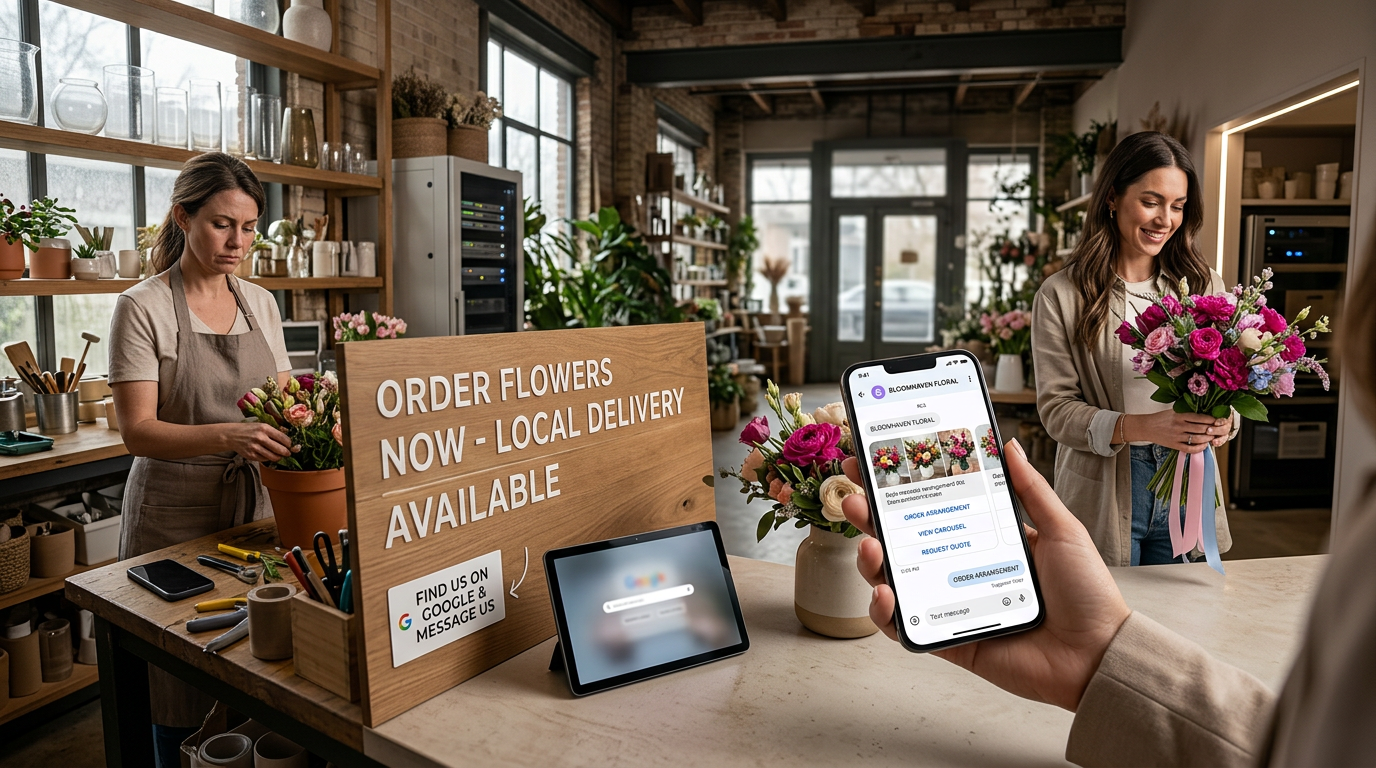
The way customers discover and engage with local businesses is undergoing a fundamental shift due to AI search.
The Traditional Search Funnel is Breaking Down
For years, finding a business online followed a predictable path: search engine, website click, then potentially a call or visit. This funnel was long, and businesses invested heavily in SEO to get clicks.
Today, AI search engines, like Google's Search Generative Experience, don't just provide links; they aim to answer questions directly, often generating summaries that include business information. This means customers get answers without needing to click through to a website. While this may seem like a challenge, it also creates a massive opportunity for businesses ready to adapt.
Conversations are the New Gateway
Instead of guiding users to a website, AI search is designed to facilitate direct actions or conversations. If a user asks, "Where can I get my awning repaired in Orlando?" an AI-powered search result might not just list local repair shops, but could offer a direct link to a conversational interface, like an RCS message, to book an appointment or get a quote. This is where the "search to conversation" model becomes critical.
In this new paradigm, your business needs to be primed for direct conversation. This isn't just about having a phone number; it's about being ready to engage instantly through messaging channels where customers are already comfortable. According to Statista, over 3.5 billion people worldwide use mobile messaging apps, confirming the importance of these channels.
From Search to Conversational AI Outcomes
The goal is no longer just a website click, but an immediate outcome. For a restaurant, this might be a table reservation. For an awning installer, it's a quote or a scheduled consultation. For a counseling clinic, it's booking an initial assessment.
Small businesses must think about how to compress the customer journey. How can you move a potential customer from identifying their need in search to taking an action as quickly and efficiently as possible? Conversational AI, delivered through platforms like MessageOS, bridges this gap.
Consider the journey for a customer searching "best burger near me." Instead of simply showing a list of restaurants, an AI assistant could surface a MessageOS-powered conversation that allows them to view the menu, see daily specials, and even place an order for pickup or delivery directly from the search result. We've seen this in action, for example, with a Google Business Messages demo for Burger King, where users can navigate menus and place orders without leaving the search results.
Rich Communication Services (RCS) Supercharges Engagement
When we talk about conversation, we're largely talking about Rich Communication Services (RCS). This is the next generation of SMS, offering a richer, app-like experience directly within the native messaging app on Android phones and increasingly on iPhones. Google has been a major proponent of RCS for years, and its broader adoption is accelerating.
RCS enables interactive elements like carousels, quick replies, and rich media, making conversations far more engaging than plain text. Imagine an awning company being able to send a carousel of their recent work, or a pet brand sharing a video of how their product works, all within a messaging thread initiated directly from a search query. This offers a compelling, interactive experience that significantly shortens the path to purchase.
For example, an awning installer in Central Florida might get a search query like "custom patio awnings Orlando." An AI search result could directly offer to connect them via Business Messages, which leverages RCS. Within this chat, the customer could browse material options, get an instant estimate based on a few quick questions, and even schedule a measurement appointment. You can see a live example of how this works with our Central Florida Awnings demo, showing how search intent transforms into a direct, engaging conversation.
Preparing Your Business for the Conversational AI Era
The key is to ensure your business is not just discoverable but also actionable in an AI search environment. This means:
- Optimizing for conversational intent: Think about the questions customers ask, not just the keywords they type.
- Enabling direct messaging: Provide clear calls to action for messaging in your Google Business Profile and other online listings.
- Automating conversations: Use AI tools to handle common queries, provide information, and guide customers toward desired outcomes 24/7. This is the essence of search-to-conversation.
This shift isn't a future trend; it's happening now. Businesses that embrace conversational AI and RCS will be best positioned to capture and convert customers directly from AI search.
What to do next
Ready to see how your business can transform AI search intent into direct customer actions? Explore our features and connect with us to understand how conversational AI can streamline your customer journey. Take the first step and schedule a demo today.
- AI Search to Conversation: The New Path to a CustomerAI search changes the customer journey from query, click, browse, convert into query, answer, act. When an assistant answers in place, the website visit may never happen, so the practical goal is to be understandable to AI systems and to offer a next step that works without a website session. A messaging thread is that next step: it starts instantly, needs no account, and can carry the outcome to completion.
- What Is RCS Business Messaging?RCS Business Messaging (RBM) is a messaging standard that replaces plain SMS with branded, verified, interactive conversations in the phone's native messaging app. A business is verified with carriers and platform providers, then sends and receives rich content: logo and brand name, rich cards, carousels, suggested replies, images, and real two-way dialogue. Availability depends on the recipient's carrier, device, and operating system, and messages fall back to SMS when RCS is unavailable.
- RCS for Restaurants: How Operators Turn Texts Into Tables, Tickets, and Repeat VisitsRestaurants run on speed, hospitality, and repeat guests. RCS Business Messaging plus an AI agent answers every inbound text in seconds, books the table, fires the to-go order, and brings the guest back, all inside the native messages app with your brand verified.
Primary sources worth reading
- Schema.org FAQPage· Schema.org
Structured data vocabulary used to make answer content machine readable for search engines and AI assistants.
- RCS Business Messaging developer documentation· Google for Developers
Google's technical reference for RCS Business Messaging: agent registration, rich cards and carousels, suggested replies and actions, capability checks, and webhook events.
MessageOS Team
· MessageOS.aiMessageOS is the Conversation-to-Outcome Platform, helping brands turn Google Search, AI Search, and click-to-message intent into branded AI conversations that deliver measurable outcomes.