RCS: The Power of an App, the Reach of a Text Message
Brands no longer need to choose between the reach of messaging and the effectiveness of a rich digital experience. RCS brings branded, interactive customer journeys into the messaging app people already use.
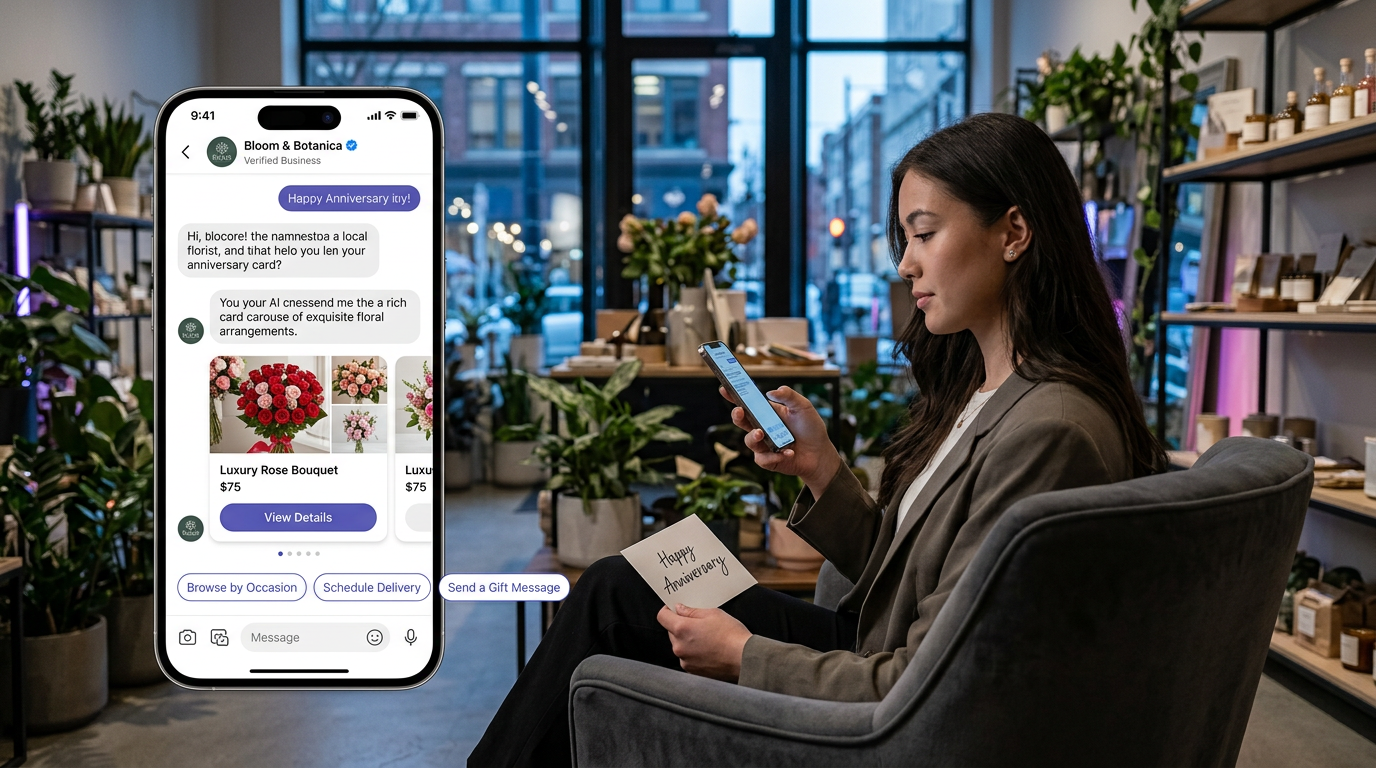
For years, businesses have treated the mobile app as the gold standard for digital customer experience.
Apps can be branded, visual, interactive, personalized, and connected to the systems that help customers accomplish something. They can support shopping, scheduling, loyalty, account management, service requests, and customer support.
But apps also introduce friction.
A customer must find the app, download it, install it, create an account, grant permissions, remember a password, and return often enough to justify keeping it.
That may make sense for a customer who interacts with a brand every week. It makes far less sense for someone who simply wants to ask a question, compare a few options, request an estimate, book an appointment, or solve a problem.
What if a brand could deliver much of the effectiveness of an app through a channel customers already understand and use?
That is the opportunity created by RCS.
What is RCS?
Rich Communication Services, or RCS, modernizes the traditional messaging experience.
SMS gave businesses reach, but it was primarily built around plain text, links, and limited media. RCS adds the visual, interactive, and trusted elements customers increasingly expect from modern digital experiences.
With RCS for Business, a brand can create a verified business presence inside the default messaging application and deliver experiences that may include:
- Branded business identity
- Rich images and media
- Product and service cards
- Swipeable carousels
- Suggested replies
- Suggested actions
- Read receipts
- Typing indicators
- Location sharing
- Appointment and booking actions
- Product discovery
- Customer support
- AI-powered conversations
Google describes RCS for Business as a way to bring branded, interactive mobile experiences into the default messaging app.
Explore RCS for Business from Google
Read Google’s RCS for Business developer overview
The result is not simply a better text message. It is a new customer-experience surface.
The effectiveness of an app
The best apps are effective because they reduce the distance between what a customer wants and what the business can help them accomplish.
A customer can open an airline app and change a flight. They can open a retailer’s app and browse products. They can open a healthcare app and manage an appointment. They can open a banking app and review an account.
The interface is useful because it connects directly to business capabilities.
RCS can bring many of those same interaction patterns into a conversation.
Instead of opening an app and navigating menus, a customer can simply state what they need:
I need an appointment next Tuesday.
Show me waterproof walking shoes under $150.
Can someone come out and give me an estimate?
Where is my order?
Which service is right for my home?
The conversation identifies intent and presents the most relevant next step.
That may be a rich card, a carousel, a suggested reply, an appointment selector, a product recommendation, or a secure handoff into the appropriate business workflow.
The value is not that RCS copies every function of a mobile app. The value is that it can deliver the right capability at the moment the customer needs it.
The reach of a text message
The strength of messaging is familiarity.
Customers already understand how to open a conversation, type a question, tap a reply, and continue a thread.
There is no new interface to learn, no additional application to install, and no icon to remember several weeks later.
The conversation remains available in the messaging application, providing a persistent thread between the customer and the brand.
That makes messaging especially useful for high-intent but occasional interactions:
- Requesting a home-service estimate
- Scheduling a dental appointment
- Asking about legal services
- Finding a hotel room
- Comparing vehicles
- Checking product availability
- Following an order
- Receiving support
- Rescheduling a service visit
The customer may not need a permanent app relationship. They may simply need the business to be available, useful, and easy to reach.
From search intent to branded conversation
The significance of RCS becomes even clearer when it is connected to search.
A customer searching Google or using an AI search experience is already expressing intent. They may be looking for a product, provider, service, recommendation, appointment, quote, answer, or immediate help.
The traditional journey often sends that customer into a website. From there, they may need to navigate menus, dismiss pop-ups, locate the right page, complete a form, and wait for someone to respond.
That journey creates unnecessary distance between intent and outcome.
A search-to-conversation experience can shorten the path.
The customer expresses intent through Google Search, AI Search, an advertisement, a website button, a QR code, social media, or another entry point.
The next step is a verified, branded conversation.
The customer can ask naturally. The brand can respond intelligently. The conversation can guide the customer toward an outcome.
Search → Conversation → Outcomes
The conversation should do more than answer questions
Many conversational systems stop at question answering. That is useful, but it is not enough.
A customer who asks whether a contractor services their neighborhood may also want to request an estimate. A customer asking about a product may want to compare options, build a cart, or purchase. A patient looking for a provider may want to schedule an appointment. A traveler comparing destinations may want to reserve a room.
A useful conversation should not end with information when the customer is ready to act.
It should connect to the business capabilities required to move forward.
At MessageOS, we refer to those connections as Outcome Connectors.
Outcome Connectors can connect the conversation to:
- Product catalogs
- Shopping carts
- Checkout
- Appointment systems
- Quote and estimate workflows
- Customer relationship management platforms
- Support systems
- Order information
- Scheduling and dispatch systems
- Intake processes
- Business data
The conversation becomes the interface. The business systems remain the engine behind it.
Commerce is becoming conversational
Commerce provides one of the clearest examples of this shift.
Customers increasingly expect to describe what they want instead of manually working through categories and filters.
A shopper may ask:
Show me lightweight luggage for an international trip.
I need a birthday gift under $75 that can arrive by Friday.
Which of these shoes is best for someone who walks several miles each day?
The AI must understand the request, find relevant products, resolve variants, check current information, and help the customer progress toward purchase.
Shopify describes agentic commerce as an experience in which AI agents help customers discover, compare, and purchase products through conversation.
Read Shopify’s guide to agentic commerce
Shopify’s Universal Commerce Protocol resources illustrate how agents can work with structured commerce capabilities for product discovery, carts, checkout, and order tracking.
Explore Shopify’s UCP resources for commerce agents
Learn about carts and checkout for agents
RCS provides a compelling branded surface for bringing these capabilities into a customer conversation.
The customer can see rich product cards, review options, ask follow-up questions, build confidence, and move toward an outcome without beginning with a traditional website journey.
More than retail
The same model applies beyond commerce.
Home services
A homeowner can describe a problem, confirm the service area, view service options, request an estimate, and schedule a visit.
Healthcare
A patient can find the right location or provider, review appointment options, receive navigation assistance, and schedule care.
Legal services
A potential client can identify the relevant practice area, answer initial intake questions, and request a consultation.
Automotive
A customer can discover inventory, ask questions about a vehicle, schedule a test drive, request a trade-in estimate, or book service.
Hospitality and travel
A traveler can explore rooms, destinations, amenities, availability, loyalty benefits, and reservation options.
Insurance
A customer can begin a quote, ask policy questions, report an issue, or navigate claims support.
In every case, the pattern is consistent:
The customer has intent.
The business has capabilities.
The conversation connects them.
Trust still matters
As conversations become more capable, trust becomes more important.
Customers need to know which business they are communicating with, whether the sender is legitimate, what information is being requested, what will happen next, how their data will be used, and whether the action is secure.
RCS for Business supports verified and branded business experiences that help distinguish an official business conversation from an unknown message.
Google also requires businesses and partners to follow policies around accurate brand identity, user consent, data transparency, and acceptable use.
Review Google’s RCS for Business policies
Trust cannot be treated as a decorative badge. It must be part of the architecture, content, workflow, and customer experience.
Apps and websites are not disappearing
This shift does not mean apps and websites are no longer valuable.
A website remains important for discovery, education, credibility, and deeper exploration. An app may remain the best experience for frequent, authenticated, or complex interactions.
The opportunity is not to replace every interface. It is to stop forcing every customer through the same interface.
A customer with a simple, high-intent need should not always have to navigate the entire website. A customer who interacts with a brand twice a year should not always need to download an app.
The right interface depends on the moment. Increasingly, that interface can be a conversation.
The role of MessageOS
MessageOS is being built as the Conversation-to-Outcome Platform.
We help brands turn Google Search, AI Search, website, advertisement, QR-code, social, and click-to-message intent into branded AI conversations that move customers toward measurable outcomes.
The experience can help customers:
- Ask
- Compare
- Shop
- Book
- Schedule
- Request an estimate
- Begin intake
- Get support
- Track an order
- Find the right next step
RCS is an important delivery surface because it combines rich, branded interaction with the familiarity and reach of messaging.
But the channel is not the outcome. The conversation is not the outcome. The outcome is what the customer successfully accomplishes.
The customer journey is getting shorter
The future customer journey will not always begin with an app download or a website visit.
It may begin with a question.
The brand understands the intent. The conversation presents the right capabilities. The business systems complete the work. The customer reaches an outcome.
No additional app.
No unnecessary website maze.
Just a more direct path from intent to outcome.
That is the power of an app with the reach of a text message.
- What Is RCS Business Messaging?RCS Business Messaging (RBM) is a messaging standard that replaces plain SMS with branded, verified, interactive conversations in the phone's native messaging app. A business is verified with carriers and platform providers, then sends and receives rich content: logo and brand name, rich cards, carousels, suggested replies, images, and real two-way dialogue. Availability depends on the recipient's carrier, device, and operating system, and messages fall back to SMS when RCS is unavailable.
- RCS vs SMS: What Actually Changes for a BusinessSMS is a universal, plain-text channel with no sender branding and a 160-character frame. RCS adds verified brand identity, rich cards, carousels, suggested replies, richer media, and true two-way conversation, but only where the carrier, device, and OS support it. Most brands run both: RCS where available, SMS as the automatic fallback.
- AI Search to Conversation: The New Path to a CustomerAI search changes the customer journey from query, click, browse, convert into query, answer, act. When an assistant answers in place, the website visit may never happen, so the practical goal is to be understandable to AI systems and to offer a next step that works without a website session. A messaging thread is that next step: it starts instantly, needs no account, and can carry the outcome to completion.
Primary sources worth reading
- RCS Business Messaging developer documentation· Google for Developers
Google's technical reference for RCS Business Messaging: agent registration, rich cards and carousels, suggested replies and actions, capability checks, and webhook events.
- RCS for Business blog· Google
Google's official program blog for RCS Business Messaging, covering feature releases, brand case studies, and carrier rollout news.
Sources and further learning
- RCS for Business· official_documentation
Google’s overview of how brands can use RCS to create rich, verified, and interactive customer conversations.
- RCS for Business Developer Documentation· official_documentation
Google’s technical overview, implementation guides, message formats, agent concepts, and development resources for RCS for Business.
- How RCS for Business Works· guide
An overview of how RCS business agents use messages, events, rich cards, media, and suggestions to guide customer conversations.
- RCS for Business Acceptable Use Policy· official_documentation
Google’s requirements for brand identity, customer transparency, data use, consent, and acceptable RCS business practices.
- Agentic Commerce on Shopify: How It Works· article
Shopify’s explanation of how AI agents help shoppers discover, compare, and purchase products through conversational experiences.
- Build Commerce Agents with UCP· official_documentation
Shopify’s official developer resources for building agentic commerce experiences using Universal Commerce Protocol capabilities.
- Carts and Checkout for Agents· official_documentation
Technical guidance for moving buyers from product selection through cart creation and checkout in a UCP-enabled experience.
MessageOS Team
· MessageOS.aiMessageOS is the Conversation-to-Outcome Platform, helping brands turn Google Search, AI Search, and click-to-message intent into branded AI conversations that deliver measurable outcomes.