Click-to-Message: What It Is, Why Brands Need It
Click-to-Message turns search and ads into direct conversations, connecting brands with customers instantly through messaging apps.
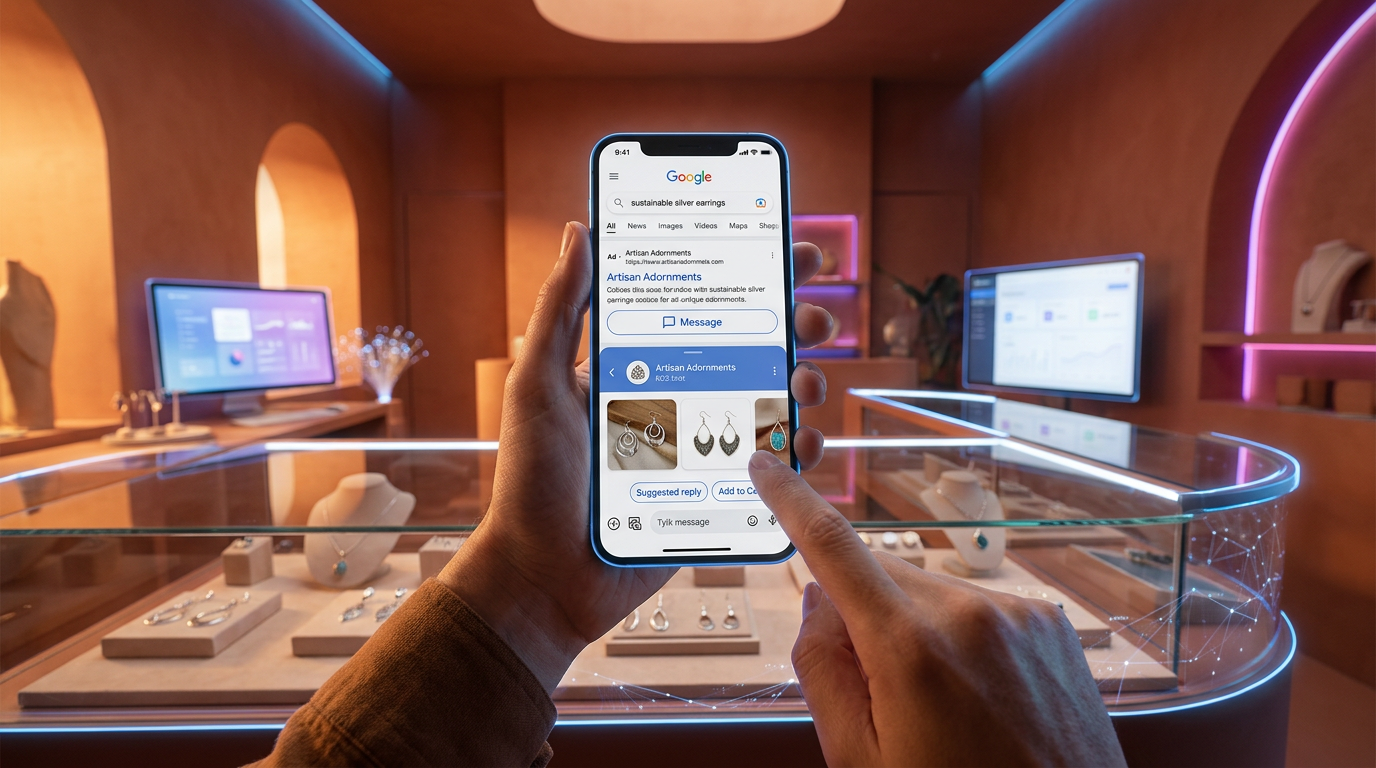
Customers want to talk to businesses, but they don't want to call or fill out forms. Click-to-Message bridges this gap, turning every digital touchpoint into a direct conversation. MessageOS.ai is building the Search → Conversation → Outcomes platform, helping brands meet customers at the moment of intent with branded AI experiences inside Messages.
Click-to-Message Connects Search, Social, and Ads to Your Business
Click-to-Message, often abbreviated as CTM, is a simple concept: it allows a customer to start a direct message conversation with your business by clicking a button or link. Instead of directing users to a website, a phone number, or a web form, CTM opens up their preferred messaging app,like Google Messages, Apple Messages, or WhatsApp,and instantly starts a chat. This happens directly from search results, social media ads, website buttons, or even QR codes.
Think about searching on Google for "pizza near me." Instead of clicking to a website to find the phone number, a Click-to-Message button could let you directly text the pizzeria to order. This eliminates friction and meets customers where they are already spending their time: in messaging apps.
Customers Prefer Messaging, and Brands Who Adapt Win
The way people interact with businesses has changed dramatically. Phone calls are often seen as intrusive, and email response times can be slow. Messaging, however, is fast, convenient, and personal. Studies consistently show a strong preference for messaging over calls and email for customer service and inquiries. That shift is why Google now positions RCS for Business as a primary channel for verified brand conversations.
Brands that embrace this shift gain a significant advantage. An awning installer, for instance, can let potential clients instantly send photos of their patio for a quick quote instead of scheduling a site visit. A pet brand can offer real-time advice on product selection directly from an Instagram ad. This responsiveness builds trust and moves customers through their journey faster.
The Rise of Conversational AI Fuels Click-to-Message Effectiveness
The real power of Click-to-Message is amplified when combined with conversational AI. Instead of a human agent handling every initial message, AI can instantly answer common questions, qualify leads, and even complete transactions. This means your business can be available 24/7, providing instant, accurate responses without additional staffing costs.
Imagine a counseling clinic where a potential patient clicks a Google Search ad and messages for information. An AI assistant could instantly provide details on services, answer FAQs about insurance, and even schedule an initial consultation, all within the messaging interface. This dramatically improves the customer experience and frees up staff for more complex interactions.
Google and Apple Are Investing in Richer Messaging Experiences
Both Google and Apple are heavily invested in improving the business messaging experience. Google's RCS (Rich Communication Services) is designed to replace traditional SMS with a more interactive, app-like experience, complete with rich media, suggested replies, and carousels. Apple Business Chat offers similar rich features directly within the Messages app on iOS devices. These platforms are built for engaging conversations, not just simple texts. You can see how a brand like Burger King uses these advanced features in our Burger King RCS demo.
This shift means that when a customer clicks a Click-to-Message button, they're not just sending a plain text. They're entering a rich, interactive environment where your brand can provide a sophisticated, guided experience. This is crucial for businesses looking to stand out in a crowded market.
Click-to-Message Is Essential for Search-to-Conversation Strategies
In an AI-first search world, the goal isn't just to get clicks to your website, but to initiate conversations that lead to action. Click-to-Message is a cornerstone of this "Search-to-Conversation" approach. Instead of hoping a user navigates your site and finds what they need, you proactively offer them a direct line to get answers and make decisions.
For an example, consider Central Florida Awnings. A customer searching for "retractable awnings Orlando" might see a Google Ad. Instead of landing on their website, they can click to message directly. An AI assistant could then guide them through options, provide estimated pricing, and even book a consultation, all within a few messages. This is a much more efficient path to conversion. See this in action with the Central Florida Awnings demo.
What to do next
Understanding Click-to-Message is the first step. The next is to see how it can work for your business. Explore how converting search and ad clicks into direct AI-powered conversations can transform your customer engagement and sales process. Learn more about how to get started on our homepage or by exploring more posts on our blog.
- Click to Message: Turning a Tap Into a ConversationClick to Message is an entry point that opens the phone's native messaging app with a conversation already addressed, and usually pre-filled, so the customer only has to press send. It can be placed on a website, a search result, an ad, a QR code, an email, a social profile, or a physical sign. It works because the customer stays in an app they already trust instead of loading a new page or filling in a form.
- What Is RCS Business Messaging?RCS Business Messaging (RBM) is a messaging standard that replaces plain SMS with branded, verified, interactive conversations in the phone's native messaging app. A business is verified with carriers and platform providers, then sends and receives rich content: logo and brand name, rich cards, carousels, suggested replies, images, and real two-way dialogue. Availability depends on the recipient's carrier, device, and operating system, and messages fall back to SMS when RCS is unavailable.
- RCS for Healthcare: Access, Reminders, and Patient CommunicationIn healthcare, RCS Business Messaging is used for appointment scheduling and reminders, pre-visit instructions, wayfinding, refill and follow-up nudges, and directing patients into secure portals for anything containing protected health information. Verified sender identity helps patients distinguish real outreach from phishing. Any deployment must be scoped by your privacy and compliance program, including HIPAA in the United States, and sensitive detail generally belongs behind an authenticated webview rather than in the thread.
Primary sources worth reading
- RCS Business Messaging developer documentation· Google for Developers
Google's technical reference for RCS Business Messaging: agent registration, rich cards and carousels, suggested replies and actions, capability checks, and webhook events.
Sources and further learning
- RCS for Business· official_documentation
Google's overview of how brands use RCS for verified, interactive customer conversations.
MessageOS Team
· MessageOS.aiMessageOS is the Conversation-to-Outcome Platform, helping brands turn Google Search, AI Search, and click-to-message intent into branded AI conversations that deliver measurable outcomes.